Bucktool Bench Belt Disc Sander Review: Who It Fits and Who Should Skip It
As an Amazon Associate we earn from qualifying purchases. Links on this page are affiliate links.
This bucktool bench belt disc sander review covers the Bucktool 4x36 Belt and 6-Inch Disc Sander. It combines a 4x36-inch belt with a 6-inch disc on one benchtop unit. The machine runs on a 3/4 HP motor drawing 5A. This direct-drive design aims for higher efficiency and quieter operation. You get two cast aluminum tables for stable work. The belt tilts from 0 to 90 degrees for angled cuts. It is built for woodworking tasks. The compact footprint fits smaller shops. This tool offers two sanding methods in one device.
What stands out
- Direct motor drive eliminates belt tension adjustments
- 3/4 HP induction motor provides quiet power
- Belt tilts 0 to 90 degrees for angled sanding
- Two cast aluminum worktables for stability
- Quick belt replacement and track control
Who it fits
Good fit for
This sander suits woodworkers who need both belt and disc functions in a single unit. The 3/4 HP motor handles general shaping and smoothing tasks. The tilting belt table helps with edge work and angled joints. Its compact size fits smaller workbenches. The direct-drive system reduces maintenance, which appeals to hobbyists. You get two tables for quick switching. The sturdy base minimizes vibration during use.
Who should skip it
You should look elsewhere if you require heavy industrial duty. The 3/4 HP motor may struggle with dense hardwoods or continuous use. The 6-inch disc is small for large surface finishing. If you need a larger 9-inch disc or wider belt, this unit is too small. Professionals requiring high-speed constant operation might find the direct drive limiting. The compact size also means less material capacity for large projects.
Verdict: This two-in-one sander offers good versatility for hobbyists and small shops. Its direct-drive design simplifies maintenance while providing adequate power for light woodworking tasks.
Key specs explained for this sander
Motor Power: 3/4 HP
This rating indicates the rotational force the motor can deliver to the sanding surfaces. You get enough torque to handle dense hardwoods without stalling. It is a mid-range power level suitable for hobbyists and small shops. When comparing benchtop machines, higher horsepower generally means faster material removal and less strain on the motor during heavy cuts.
Belt Size: 4x36"
This dimension defines the width and length of the sanding belt. A 4-inch width allows you to sand relatively wide boards in a single pass. The 36-inch length determines the belt loop size and available contact area. You should check if your standard belts fit this size. It is a common size for entry-level benchtop sanders.
Disc Diameter: 6"
This measurement refers to the size of the rotating sanding disc. A 6-inch disc provides a smaller contact patch than larger models. It is ideal for detailed work, curves, and smaller projects. You get better control for intricate shaping. When shopping, note that larger discs cover more surface area but offer less precision for fine details.
Belt Tilt Range: 0 to 90 degrees
This feature allows the belt to angle from flat to vertical. You can sand flat surfaces or transition to vertical sanding for edges and curves. The wide range supports various woodworking techniques without repositioning the workpiece. Compare this to fixed-tilt models that limit your angles. This flexibility adds value for multi-angle projects.
Configuration: Bench
This classification means the unit is designed to sit securely on a workbench or table. You need a stable surface to operate it safely. Benchtop models save floor space and are portable compared to floor-standing units. When choosing between benchtop and floor models, consider your workspace size and the weight capacity of your existing bench.
Design and build overview
According to the listing, this unit measures 23.8 inches long, 11.6 inches wide, and 20.5 inches tall. It weighs 35.5 pounds. The sturdy cast aluminum base includes rubber feet to prevent vibrations during operation. This layout ensures stability on your workbench while you sand. The two cast aluminum worktables offer a smooth surface for guiding your wood. They are adjustable, allowing you to tilt the belt from 0 to 90 degrees. This feature lets you handle both horizontal and vertical sanding tasks with ease.
The machine combines a 4x36-inch belt and a 6-inch disc in one compact frame. This two-in-one design saves space in your workshop. The direct-drive motor shaft eliminates the need for belt tension adjustments. You do not need to change damaged belts frequently, which reduces maintenance time. The quick replacement design and track control function further simplify belt changes. The angle-adjustable work table includes a miter gauge for precise cuts.
This build quality suits woodworking projects that require versatility. The cast aluminum components provide durability for regular use. The compact footprint fits well on standard benchtops. You can switch between belt and disc sanding without moving the machine. The design prioritizes efficiency and ease of use for hobbyists and small shop owners.
Setup and daily operation guide
Setting up this sander requires placing the 35.5-pound unit on a stable bench. The cast aluminum base with rubber feet helps minimize vibration during operation. You do not need to adjust belt tension because the belt and disc are directly driven by the motor shaft. This design simplifies maintenance, as you do not need to change damaged belts in the traditional manner. The listing suggests using a Y-fitting hose to manage dust effectively.
Daily use involves switching between the 4x36-inch belt and the 6-inch disc. The belt tilts from 0 to 90 degrees, allowing for both horizontal and vertical sanding. This feature helps you meet various project needs. The driven drum supports sanding curved work-pieces. Quick replacement of the sanding belt is possible thanks to the track control function. Both the belt and disc share an angle-adjustable work table with a miter gauge. You can use the same table setup for both sanding modes.
The 3/4 HP motor provides quiet but powerful performance. The direct-drive design claims 25% higher efficiency than traditional systems. This setup maximizes the motor’s potential. The machine meets CSA standards for safety. You can sand wood using either the belt or the disc. The two cast aluminum workbenches offer convenient surfaces for your projects. This configuration suits woodworking tasks that require versatile sanding options on a single benchtop machine.
Before You Buy This Sander
Owning this Bucktool bench sander requires a few extra items for full functionality. The listing suggests using a Y-fitting hose to manage dust effectively. You must verify your workshop has adequate space for its 23.8-inch length and 11.6-inch width. The 35.5-pound weight demands a solid bench to handle the vibration dampening provided by the rubber feet. Check that your power outlet supports the 5A draw from the 3/4 HP motor. This unit fits well alongside other benchtop machines if you prioritize wood shaping. It is ideal for users who need both belt and disc sanding without switching tools. Ensure your project types align with the 4x36-inch belt and 6-inch disc sizes. Maintenance is simplified by the direct-drive design, but you should still inspect belts regularly. This sander suits hobbyists who want a compact, two-in-one solution for various woodworking tasks.
Check before you buy
- Verify bench space for 23.8-inch length and 11.6-inch width
- Ensure power outlet supports 5A motor draw
- Check for Y-fitting hose compatibility for dust collection
- Confirm 4x36 belt and 6-inch disc meet project needs
The product at a glance
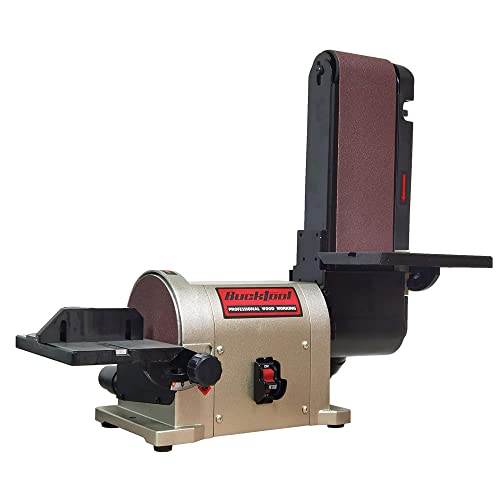
Bucktool 4x36 Belt and 6-Inch Disc Sander
Best for: Small-scale woodworking and angled sanding tasks
- Belt Size
- 4 x 36 in.
- Disc Diameter
- 6 in.
- Motor Power
- 3/4 HP
- Amperage
- 5A
- Belt Speed
- 2161 FPM
- Disc Speed
- 3450 RPM
View on Amazon: Bucktool 4x36 Belt and 6-Inch Disc Sander Affiliate link
The Bucktool BD4603A is a benchtop sander combining a 4x36-inch belt and a 6-inch disc. It uses a 3/4 HP motor that drives both surfaces directly, saving you from belt tension adjustments. The belt tilts 0 to 90 degrees for angled work, and the cast aluminum tables reduce vibration. This setup suits woodworkers needing a compact, maintenance-free unit for general shaping and smoothing tasks.
Pros
- Direct motor drive eliminates belt tension adjustments
- Belt tilts 0 to 90 degrees for angled sanding
- Cast aluminum base reduces vibration
- Includes miter gauge for both belt and disc
Cons
- Smaller 4x36-inch belt width limits wide stock sanding
- No variable speed control listed in specifications
- Heavier build at 35.5 pounds reduces portability
Good fit if
- You need a dual-sander for small woodworking projects
- You want to avoid frequent belt tension adjustments
- You require angled sanding capabilities up to 90 degrees
Skip if
- You frequently sand wide boards beyond 4 inches
- You require variable speed settings for delicate materials
- You need a lightweight sander for frequent transport
Verdict: The Bucktool 4x36 Belt Disc Sander fits hobbyists who value low maintenance and angled sanding over high-speed versatility. It is a solid benchtop choice for small-scale shaping and smoothing.
Specifications side by side
| Spec | Bucktool 4x36 Belt and 6-Inch Disc Sander |
|---|---|
| Belt Size | 4 x 36 in. |
| Disc Diameter | 6 in. |
| Motor Power | 3/4 HP |
| Amperage | 5A |
| Belt Speed | 2161 FPM |
| Disc Speed | 3450 RPM |
| Belt Tilt Range | 0 to 90 degrees |
| Configuration | Bench |
| Features | Miter Gauge |
| Target Material | Wood |
| Cutting Width | 6-Inch |
| Application | Woodworking |
| Disc Size | 6-Inch Disc |
| Dimensions | 23.8 × 11.6 × 20.5 inches |
| Weight | 35.5 pounds |
| Size | 4x36in Belt & 6in Disc |
| Model | BD4603A |
Frequently asked questions
What belt and disc sizes does this sander use?
This unit uses a 4-inch by 36-inch belt and a 6-inch disc. These dimensions define the maximum width of material you can sand at once. The belt size suits standard woodworking projects, while the disc offers flexibility for curved edges. You should purchase abrasives that match these specific measurements for proper fit and performance.
Is the Bucktool sander suitable for hardwoods?
Yes, it is designed for wood, including dense hardwoods. The 5-amp motor provides sufficient torque to handle these materials without stalling. You can shape and smooth hard species effectively. Just ensure you feed the material steadily to maintain consistent results and prevent overheating the motor during extended sanding sessions.
How much space does this sander require?
You need a workbench area at least 23.8 inches long and 11.6 inches wide. The unit stands 20.5 inches tall, so check your ceiling clearance too. The base measures 11.6 inches wide, providing a stable footprint. Plan your workshop layout to accommodate these dimensions for safe and comfortable operation.
Does this sander need belt tension adjustment?
No, this model features a direct-drive design that eliminates the need for manual belt tensioning. The belt runs continuously once powered. This reduces maintenance and simplifies setup. You can switch between belt and disc operations quickly without adjusting tension mechanisms, making it easier for frequent users to maintain workflow.
What is the weight of this bench sander?
The unit weighs 35.5 pounds. This weight helps keep it stable on your workbench during aggressive sanding. The cast aluminum base adds to the mass and reduces vibration. You should secure it to your bench if you plan to use high pressure, as the weight alone may not prevent shifting.
Can I connect a dust collector to this sander?
You can manage dust by using a Y-fitting hose. The listing suggests this method to connect standard dust collection equipment. Ensure your shop vacuum or collector has adequate airflow to handle the debris generated. Proper dust management extends the life of the motor and keeps your workspace cleaner during use.
Who is this sander best for?
It fits hobbyists who value low maintenance and angled sanding. The direct-drive system reduces upkeep compared to tensioned belt models. It is ideal for small-scale shaping and smoothing tasks. If you need high-speed versatility for industrial production, this unit may not meet your needs, but it excels in home workshops.