Speed Settings Explained: What It Means for Drill Presses
As an Amazon Associate we earn from qualifying purchases. Links on this page are affiliate links.
Understanding Drill Press Speed Settings
Speed settings explained helps you match the drill press output to the material you are working on. The motor spins the chuck at a specific rate, measured in revolutions per minute, or RPM. This number determines how fast the drill bit cuts. Higher speeds work best for small holes in soft materials like wood or plastic. Lower speeds provide better control and torque for large holes or hard metals like steel.
Most drill presses offer fixed speed options. You will see listings labeled with two, four, or five speeds. A two-speed model typically uses a belt change to shift between a high range and a low range. This is common in benchtop machines where space is limited. A four-speed or five-speed press offers more granular control. You can select a setting that sits closer to the ideal RPM for your specific bit size and material.
Variable speed models use a dial or lever to adjust the output continuously. This allows you to fine-tune the rotation without stopping to change belts. It is convenient for tasks that require quick adjustments. However, variable speed mechanisms can add complexity to the head assembly.
Why does this matter to you? Using the wrong speed damages your bits and your workpiece. A bit that is too slow for metal can overheat and dull quickly. A bit that is too fast for wood can burn the material or kick back. You need to calculate the correct RPM based on the bit diameter. The manufacturer usually provides a chart for this.
When shopping, check the RPM range for each setting. A wider range gives you more flexibility. Look for clear labeling on the machine. Ensure the speed selection mechanism is easy to access and secure. Proper speed management extends tool life and improves cut quality.
Speed Settings Options Compared
Variable Speed
Variable speed allows you to adjust the RPM continuously using a dial or trigger. This feature provides the most flexibility for different materials and bit sizes. You can fine-tune the rotation rate to prevent burning wood or overheating metal. The WEN 12-Inch Variable Speed Drill Press uses this method for precise control. It suits users who drill frequently changing materials without stopping to change belts. The trade-off is that variable speed mechanisms can be more complex and potentially less durable than fixed gears. You must ensure the motor maintains torque across the entire range.
5-Speed
Five-speed drill presses offer a middle ground between fixed and variable options. You select one of five preset RPM ranges by moving a belt or lever. This setup provides enough variety for most woodworking and light metal tasks. The SKIL 10-Inch 5-Speed Benchtop Drill Press and the Bucktool 10-Inch model use this configuration. It suits hobbyists who need reliability without the maintenance of variable dials. The trade-off is that you cannot make micro-adjustments. If your ideal speed falls between two settings, you must choose the closest option. This can lead to suboptimal performance for specialized bits or hard materials.
2-Speed
Two-speed models provide distinct high and low ranges, usually selected by moving a belt or switching a gear. This design is common in magnetic drill presses for heavy-duty applications. The DEWALT 2-Inch 2-Speed Magnetic Drill Press and the BLUEROCK 2-Speed Reversible Magnetic Drill use this setup. It suits contractors drilling large holes in steel on-site. The high speed range handles smaller bits efficiently, while the low range provides torque for large core bits. The trade-off is limited versatility. You cannot adjust within the range, so you must match your bit size to the selected speed. This requires planning before you start drilling.
4-Speed
Four-speed settings offer four distinct RPM ranges for drilling tasks. This configuration is less common but provides more options than two-speed models. You select the speed by adjusting the belt position on the motor and spindle pulleys. This setup suits users who need more granularity than two speeds but do not require variable control. The trade-off is that changing speeds requires stopping the machine and manual adjustment. You must ensure the motor is off before moving the belt. This process takes time, making it less efficient for jobs requiring frequent speed changes. It is best for workshops where speed changes are planned and infrequent.
Who Needs Variable Speed?
Who needs it
You need variable speed if you work with mixed materials daily. This setting lets you dial in the exact RPM for each task. Drilling soft wood requires high speeds to clear chips quickly. Cutting steel demands low speeds to prevent overheating the bit. If you switch between aluminum, plastic, and hardwood in one project, a variable control saves time. You avoid stopping to change pulleys or belts. This flexibility reduces bit wear and improves cut quality. Hobbyists who tackle diverse DIY projects benefit most. Professionals in metalworking or fine woodworking also rely on this precision. It ensures safety and efficiency across different workpieces. If your workflow involves frequent material changes, this spec is essential for consistent results and tool longevity.
Who can skip it
You can skip variable speed if you only drill one type of material. Users who exclusively work with standard wood or metal can use fixed-speed models. These machines often offer multiple discrete speeds, such as two, four, or five options. This range covers most common drilling tasks without complexity. Fixed-speed presses are typically simpler and more robust. They have fewer moving parts, which means less maintenance. If you do not need fine-tuned RPM adjustments, a multi-speed model is sufficient. Prioritize chuck size and table stability instead. These factors impact your ability to handle larger workpieces. Also, consider the motor power for your specific drilling depth requirements. Variable controls add cost and potential points of failure. For straightforward, repetitive drilling tasks, a simpler machine is often more practical and reliable.
Drill Press Speed Glossary
RPM
Revolutions per minute measures how fast the chuck spins. Higher RPMs suit soft materials like wood. Lower RPMs prevent overheating when drilling hard metals like steel or aluminum.
Variable Speed
This feature lets you adjust rotation continuously via a dial or trigger. It offers precise control for mixed materials, preventing bit burn in wood or overheating in metal workpieces.
Fixed Speed
Fixed speed models offer distinct gear ratios rather than continuous adjustment. You select a setting by moving the belt or switching gears. This method is reliable but less flexible than variable options.
Motor Wattage
Wattage indicates the power output of the motor. Higher wattage drives larger bits through tough materials without stalling. It ensures consistent torque across different speed settings during heavy duty drilling tasks.
Swing
Swing defines the maximum distance from the spindle to the column. It determines the largest diameter of material you can drill in one setup. A larger swing accommodates wider workpieces effectively.
Amperage
Amperage measures electrical current draw. Higher amps typically signal a more powerful motor capable of sustained operation. It helps you match the machine to your workshop circuit capacity safely.
Voltage
Voltage represents the electrical potential required to run the machine. Most benchtop models use standard 120V household power. Always check your outlet compatibility to ensure safe and proper operation of the press.
Quick picks
| # | Product | Best for | Price |
|---|---|---|---|
| 1 | WEN 12-Inch Variable Speed Drill Press | Precise speed control and stability | Check price of WEN 12-Inch Variable Speed Drill Press on Amazon |
| 2 | SKIL 10-Inch 5-Speed Benchtop Drill Press | Users needing fixed speeds and laser alignment | Check price of SKIL 10-Inch 5-Speed Benchtop Drill Press on Amazon |
| 3 | DEWALT 2-Inch 2-Speed Magnetic Drill Press | On-site 2-inch core drilling in steel | Check price of DEWALT 2-Inch 2-Speed Magnetic Drill Press on Amazon |
| 4 | VEVOR 1450W Variable Speed Magnetic Drill | thick steel plate core drilling | Check price of VEVOR 1450W Variable Speed Magnetic Drill on Amazon |
| 5 | Bucktool 10-Inch 3/4 HP Bench Drill Press | Manual speed drilling in wood and metal | Check price of Bucktool 10-Inch 3/4 HP Bench Drill Press on Amazon |
| 6 | BLUEROCK 2-Speed Reversible Magnetic Drill | large diameter core drilling on steel | Check price of BLUEROCK 2-Speed Reversible Magnetic Drill on Amazon |
Our 6 picks
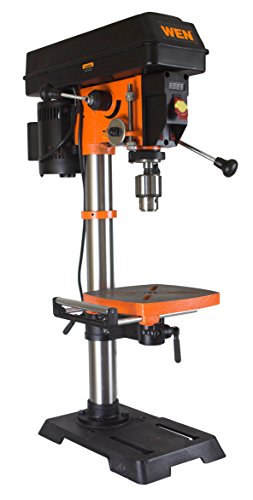
WEN 12-Inch Variable Speed Drill Press
Best for: Precise speed control and stability
- Speed Settings
- Variable Speed (what this guide is about)
- Motor Power
- 6.2-amp
- Spindle Speed
- 580 to 3100 RPM
- Swing
- 12-inch
- Spindle Travel
- 3-1/8-inch
- Chuck Capacity
- 5/8-inch
View on Amazon: WEN 12-Inch Variable Speed Drill Press Affiliate link
The WEN DP1263V offers continuous variable speed control from 580 to 3100 RPM, allowing you to match the bit to the material precisely. It features a 6.2-amp motor, a 12-inch swing, and a digital readout for accuracy. The cast iron base provides stability, while the included laser and LED light improve visibility. This benchtop unit suits hobbyists who need flexibility without switching gears.
Pros
- Variable speed range from 580 to 3100 RPM
- Digital speed readout displays current RPM
- 12-inch swing capacity for larger workpieces
- Includes laser guide and overhead LED light
Cons
- Heavier build at 88 pounds limits portability
- 5/8-inch keyed chuck capacity is standard, not high
- Two-year warranty is shorter than some competitors
Good fit if
- You need precise speed adjustments for different materials
- You want a digital readout for accuracy
- You value a stable cast iron base
Skip if
- You require a magnetic base for vertical surfaces
- You need a 15-amp motor for heavy industrial use
- You prefer a lighter, more portable unit
Verdict: WEN 12-Inch Variable Speed Benchtop Drill Press delivers precise speed control and stability for detailed woodworking. It fits users who prioritize accuracy and a wide RPM range over portability.

SKIL 10-Inch 5-Speed Benchtop Drill Press
Best for: Users needing fixed speeds and laser alignment
- Speed Settings
- 5-Speed (what this guide is about)
- Motor Power
- 6.2 Amp
- Spindle Speed
- 5 speeds (610 to 2800 RPM)
- Swing
- 10 In.
- Configuration
- Benchtop
- Amperage
- 6.2 A
View on Amazon: SKIL 10-Inch 5-Speed Benchtop Drill Press Affiliate link
The SKIL 10-Inch Benchtop Drill Press offers 5 speed settings ranging from 610 to 2800 RPM. This range lets you adjust for various materials. It includes a laser alignment system and an LED work light. The 6.2 Amp induction motor provides consistent power. You get adjustable depth and table height for precise control. This tool suits users who need clear guidance and multiple speed options.
Pros
- 5-speed system from 610 to 2800 RPM
- Laser alignment system for precision
- LED work light illuminates workspace
- Adjustable depth stop ensures accuracy
Cons
- 10-inch swing limits large workpieces
- No variable speed control for infinite adjustment
- Laser is Class II with low power
Good fit if
- You need multiple fixed speeds for different materials
- You want laser alignment for accuracy
- You prefer a benchtop configuration
Skip if
- You require variable speed control
- You need to drill large diameters
- You want magnetic base stability
Verdict: SKIL 10-Inch 5-Speed Benchtop Drill Press fits users who need fixed speed options and laser guidance for precise benchtop drilling tasks.
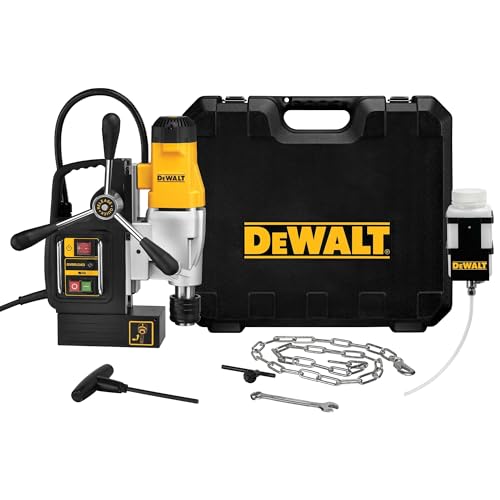
DEWALT 2-Inch 2-Speed Magnetic Drill Press
Best for: On-site 2-inch core drilling in steel
- Speed Settings
- 2-Speed (what this guide is about)
- Motor Power
- 10 A
- Spindle Speed
- 2-speed
- Hole Capacity
- 2 in
- Spindle Travel
- 4 in
- Chuck Capacity
- Quick Change chuck system
View on Amazon: DEWALT 2-Inch 2-Speed Magnetic Drill Press Affiliate link
The DEWALT DWE1622K is a magnetic drill press designed for heavy-duty core drilling. It features a 10-amp motor and a 2-speed setting to handle different material requirements. You get a 2-inch hole capacity and 4 inches of spindle travel for substantial depth. The quick-change chuck system simplifies bit swaps. Overload protection electronics help prevent motor damage during demanding tasks.
Pros
- 10-amp motor provides strong torque for core drilling
- 2-speed settings allow adjustment for various materials
- 4-inch spindle travel offers deep drilling capacity
- Quick-change chuck system speeds up bit changes
- Overload protection electronics safeguard the motor
Cons
- Limited to only 2 speed settings
- 2-inch hole capacity is smaller than 4-inch core drills
- Fixed magnetic base requires flat ferrous surfaces
Good fit if
- You need a portable drill for on-site core drilling
- You work with thick steel or metal plates
- You require a 2-inch maximum hole size
Skip if
- You need to drill holes larger than 2 inches
- You require variable speed control for fine adjustments
- You are drilling into non-magnetic materials like aluminum or wood
Verdict: DEWALT 2-Inch 2-Speed Mag Drill is a robust tool for contractors who need to drill precise 2-inch holes in steel on-site. It fits users who prioritize portability and motor protection over high-speed versatility.

VEVOR 1450W Variable Speed Magnetic Drill
Best for: thick steel plate core drilling
- Speed Settings
- Variable Speed (what this guide is about)
- Motor Power
- 1450W
- Spindle Speed
- 0-750 RPM
- Hole Capacity
- 2" / 50 mm
- Spindle Travel
- 2" / 50 mm
- Magnetic Force
- 2922 lbf / 13,000 N
View on Amazon: VEVOR 1450W Variable Speed Magnetic Drill Affiliate link
This VEVOR magnetic drill press features a 1450W motor and variable speed control ranging from 0 to 750 RPM. It provides 2922 lbf of holding force for secure attachment to steel plates at least 10 mm thick. The unit includes a built-in scale for precise measurements and weighs 26.5 pounds. It suits professionals needing portable core drilling capabilities on thick metal surfaces.
Pros
- Variable speed settings from 0-750 RPM for precise control
- High magnetic holding force of 2922 lbf for stability
- Built-in scale for accurate distance measurement during drilling
- 1450W copper motor delivers strong performance on tough materials
Cons
- Not suitable for stainless steel or cast iron materials
- Requires steel plates at least 0.39 inches thick
- Limited to 2-inch maximum coring diameter and depth
Good fit if
- You need to drill core holes in thick structural steel
- You require a portable magnetic drill for field work
- You need variable speed control for different hole sizes
Skip if
- You plan to drill into stainless steel or cast iron
- You need to drill holes in steel thinner than 0.39 inches
- You require a drill press for wood or plastic materials
Verdict: VEVOR 1450W Mag Drill Variable Speed is ideal for fabricators drilling thick steel plates where portability and variable speed control are essential. It fits users who need high holding force for vertical or inverted drilling on heavy gauge metal.

Bucktool 10-Inch 3/4 HP Bench Drill Press
Best for: Manual speed drilling in wood and metal
- Speed Settings
- 5-Speed (what this guide is about)
- Motor Power
- 3/4 HP, 6.2 A
- Spindle Speed
- 5-speed, 650-3100 RPM
- Swing
- 10-inch
- Spindle Travel
- 2-inch
- Chuck Capacity
- 1/2-inch keyed chuck
View on Amazon: Bucktool 10-Inch 3/4 HP Bench Drill Press Affiliate link
The Bucktool 10-inch bench drill press features a 6.2-amp, 3/4 HP induction motor with five fixed speeds ranging from 650 to 3100 RPM. It includes a 1/2-inch keyed chuck and a 2-inch spindle travel. The cast iron base provides stability, while the 45-degree tilting worktable with LED lighting aids visibility. This unit suits users needing manual speed changes for wood, plastic, or metal drilling tasks.
Pros
- Five fixed speeds (650/1100/1700/2300/3100 RPM) for material versatility
- Robust cast iron base minimizes vibration
- 45-degree tilting worktable with built-in LED light
- Removable switch keys prevent accidental starts
Cons
- Requires manual belt changes to adjust speed
- 10-inch swing limits capacity for wider workpieces
- Fixed speeds only, no variable speed control
Good fit if
- You need multiple speed options for different materials
- You value stability from a cast iron base
- You want clear visibility with integrated LED lighting
Skip if
- You require variable speed for fine-tuning RPM
- You need to drill holes larger than 5 inches in diameter
- You prefer digital speed displays or electronic controls
Verdict: Bucktool 10-Inch 5-Speed Bench Drill Press fits hobbyists who need reliable manual speed changes for various materials. It offers stable performance for standard workshop tasks.

BLUEROCK 2-Speed Reversible Magnetic Drill
Best for: large diameter core drilling on steel
- Speed Settings
- 2-Speed (what this guide is about)
- Motor Power
- 1850W
- Spindle Speed
- 2-speed, 260/470 RPM
- Hole Capacity
- 2-1/4"
- Spindle Travel
- 9"
- Magnetic Force
- 4050 LB
View on Amazon: BLUEROCK 2-Speed Reversible Magnetic Drill Affiliate link
This magnetic drill press delivers 1850W of power for drilling holes up to 2-1/4 inches in diameter. It features a two-speed motor with settings at 260 and 470 RPM. The unit includes a heavy-duty 4050 lbf magnetic base for secure attachment to steel surfaces. You get a 2-inch spindle travel and a 9-inch total stroke. It comes with a carrying case and necessary adapters.
Pros
- 1850W motor provides high torque for large diameter holes
- Two-speed settings allow selection between 260 and 470 RPM
- 4050 lbf magnetic base ensures stable mounting on steel
- Includes MT3 arbor with adapters for various drill bits
Cons
- Limited to only two fixed speed settings
- 2-inch spindle travel restricts deep hole drilling
- Heavy 52 lbs base requires careful handling
Good fit if
- You need to drill large holes in thick steel plates
- You require a portable solution for on-site magnetic drilling
- You work with materials that benefit from lower RPM speeds
Skip if
- You need variable speed control for fine material adjustments
- You require more than 2 inches of spindle travel
- You need to drill into non-magnetic materials like wood or aluminum
Verdict: BLUEROCK 2-Speed Magnetic Drill Press is a robust tool for heavy-duty core drilling. It suits professionals who need high magnetic force and large hole capacity on steel surfaces.
Specifications side by side
| Spec | WEN 12-Inch Variable Speed Drill Press | SKIL 10-Inch 5-Speed Benchtop Drill Press | DEWALT 2-Inch 2-Speed Magnetic Drill Press | VEVOR 1450W Variable Speed Magnetic Drill | Bucktool 10-Inch 3/4 HP Bench Drill Press | BLUEROCK 2-Speed Reversible Magnetic Drill |
|---|---|---|---|---|---|---|
| Motor Power | 6.2-amp | 6.2 Amp | 10 A | 1450W | 3/4 HP, 6.2 A | 1850W |
| Spindle Speed | 580 to 3100 RPM | 5 speeds (610 to 2800 RPM) | 2-speed | 0-750 RPM | 5-speed, 650-3100 RPM | 2-speed, 260/470 RPM |
| Hole Capacity | not stated | not stated | 2 in | 2" / 50 mm | not stated | 2-1/4" |
| Swing | 12-inch | 10 In. | not stated | not stated | 10-inch | not stated |
| Spindle Travel | 3-1/8-inch | not stated | 4 in | 2" / 50 mm | 2-inch | 9" |
| Magnetic Force | not stated | not stated | not stated | 2922 lbf / 13,000 N | not stated | 4050 LB |
| Chuck Capacity | 5/8-inch | not stated | Quick Change chuck system | not stated | 1/2-inch keyed chuck | MT3, 3/4" Weldon Shank |
| Voltage | not stated | not stated | not stated | not stated | 120VAC | 120V |
| Configuration | Benchtop | Benchtop | Magnetic | Magnetic | Benchtop | Magnetic |
| Speed Settings | Variable Speed | 5-Speed | 2-Speed | Variable Speed | 5-Speed | 2-Speed |
| Amperage | 6.2 A | 6.2 A | 10 Amp | not stated | 6.2 A | not stated |
| Features | Work Light, Laser Guide | Work Light, Laser Guide | not stated | not stated | Tilting Table, Work Light | not stated |
| Target Material | not stated | not stated | not stated | Metal | not stated | not stated |
| Design | not stated | not stated | not stated | Portable | not stated | not stated |
| Cutting Capacity | not stated | not stated | 2-Inch | not stated | not stated | not stated |
| Dimensions | 22 × 14.5 × 37 inches | 1 × 1 × 1 inches | 22.4 × 6.5 × 19.3 inches | 11 × 7.1 × 14.2 inches | 9.45 × 18.9 × 28.7 inches | 12.5 × 4.5 × 28 inches |
| Weight | 88 pounds | not stated | 33 pounds | 26.5 pounds | not stated | not stated |
| Size | 6.2-Amp Motor | One Size | 2-Inch | W/ 2 in 6 pieces - Tapping (NEW) | 10 Inch, 6.0 A, 3/4 HP, 5-Speed | not stated |
| Color | Orange | Multi | Multi | Orange W/ 2" 6pcs | Clear | Black |
| Model | DP1263V | DP9505-00 | DWE1622K | 8880E | DP25016A2 | BRM-60A-B |
Frequently asked questions
What is the difference between variable speed and fixed speed drill presses?
Variable speed models let you adjust the RPM continuously using a dial or trigger. Fixed speed options offer a set number of discrete gears, such as 2, 4, or 5 speeds. Variable speed provides finer control for mixed materials, while fixed speeds offer simplicity and consistency for specific tasks.
Do magnetic drill presses have variable speed controls?
Yes, some magnetic drills feature variable speed settings. For example, the VEVOR 1450W Magnetic Drill offers variable speed control for thick steel plate drilling. Other magnetic models, like the DEWALT DWE1622K, provide 2-speed options. These settings help manage heat and precision during on-site core drilling.
Which drill press is best for precise speed control in woodworking?
The WEN 12-Inch Variable Speed Drill Press is ideal for precise control. It features a 6.2-Amp motor and variable speed settings for detailed woodworking. The benchtop configuration adds stability, while the laser guide and work light assist with accuracy. This model suits users prioritizing a wide RPM range.
Can I use a 5-speed drill press for metal drilling?
Yes, 5-speed models like the SKIL DP9505-00 or Bucktool DP25016A2 work well for metal. These presses offer multiple fixed speeds to match different material densities. The SKIL model includes a laser guide for alignment, while the Bucktool offers a 3/4 HP motor. Lower speeds prevent overheating when cutting steel.
What speed settings are available for drilling large holes in steel?
Magnetic drill presses are designed for large holes in steel. The BLUEROCK BRM-60A-B offers 2-speed settings for heavy-duty core drilling. The DEWALT DWE1622K also provides 2 speeds for precise 2-inch holes. These tools prioritize motor protection and portability for contractors working on-site with thick metal.
How does swing size affect speed selection?
Swing size determines the maximum distance from the column to the chuck, not the speed settings. However, larger swings like the 12-inch WEN or 14-inch VEVOR often pair with robust motors. The WEN 12-inch model uses variable speed for stability, while the VEVOR magnetic drill uses variable speed for thick plates.